Simple ways to cook the halibut and salmon you took home, starting with Dave's go-to. Your fish came home trimmed and ready to cook. Here's what to do with it.
A week of fishing ends with a freezer full of fillets. This page is for the months after: the recipes our crew actually makes at home, collected in one place so you can pull up a good one when you open the next bag.
Every recipe here comes from someone at Shelter Cove, with their name on it. We'll keep adding to it. Want to know how much fish you'll be cooking? See what you'll catch and take home.
Your fish left the lodge cleaned, trimmed, vacuum-sealed, labeled, and flash-frozen in manageable portions. We trim every fillet at the lodge so there's no trimming required before you cook it. That trades a little yield for a finished product you can use straight from the bag.
From freezer to pan
Pick a portion. Each bag is labeled, so grab what you need and leave the rest frozen.
Thaw it in the bag in a lukewarm water bath. Leave the bag sealed and set it in a bowl or sink of lukewarm water. Fillets thaw in minutes.
Tear open the bag and rinse. Rinse the fish thoroughly in cold water and pat it dry.
Cook it right away. Cut it into serving pieces if you like. That's it: it's ready to cook.
Planning ahead instead? Open the bag, set the fish on a plate, and thaw it in the refrigerator overnight. Your fish is good in the freezer for up to two years, and some species last longer than others. Halibut, lingcod, and rockfish are lean white fish and cook fast, so take them off the heat as soon as the flesh turns opaque and flakes.
From Our Crew
Dave's Go-To Recipe
Good fish doesn't need much. This is the one Dave makes at home, and it works for halibut or salmon.
Halibut or Salmon
Simple Baked Halibut or Salmon
From: Dave's go-to Oven: 375°F Bake: 7 to 9 minutes
Ingredients
Halibut or salmon fillets, thawed
Salt
Pepper
Garlic
Steps
Heat the oven to 375°F.
Season the fillets with salt, pepper, and garlic.
Bake for 7 to 9 minutes, depending on the thickness of the fillet.
Tip: Thinner fillets land closer to 7 minutes, thicker ones closer to 9. Pull the fish as soon as it turns opaque and flakes.
Prefer the grill? Season the fillets the same way with salt, pepper, and garlic, and grill them instead of baking.
Dave's grilled king salmon.
The One Dave's Kids Love
Halibut
Parmesan Baked Halibut
From: Dave's family table Oven: 375°F Bake: 8 to 12 minutes
Ingredients
Halibut fillets
Mayo
Lemon
Garlic
Salt and pepper
Shredded Parmesan or Asiago cheese
Non-stick coating for the pan
Steps
Start thawing your halibut as directed above.
In a 3-cup bowl, mix mayo, lemon, garlic, salt, and pepper to taste. It's not rocket science: don't make it too garlicky or too salty, but get some flavor in there.
Preheat the oven to 375°F.
Once the halibut is mostly thawed, rinse it, pat it dry, and cut it into individual portions.
Prepare a baking sheet with a light coating of your non-stick preference. Set the halibut on the sheet and spread a 1/8-inch coating of the mayo mixture on top.
Top with a healthy mound of shredded Parmesan or Asiago.
Bake for 8 to 12 minutes.
Check for doneness with a fork in the thickest part of the largest piece: poke and twist. If it flakes apart, it's done. If it doesn't, give it another minute.
Pro tip: When you pick your packages from the freezer, choose pieces of about the same thickness so everything cooks in the same amount of time.
More Recipes
Rockfish or Lingcod
Pan-Seared Rockfish Tacos
Stovetop: medium-high Cook: 4 to 6 minutes
Ingredients
1 pound rockfish or lingcod fillets, thawed
1 teaspoon chili powder
1/2 teaspoon ground cumin
1/2 teaspoon garlic powder
Salt and pepper
1 tablespoon cooking oil
8 small corn or flour tortillas
Shredded cabbage, lime wedges, and your favorite salsa
Steps
Pat the fillets dry and cut them into strips about an inch wide.
Mix the chili powder, cumin, garlic powder, salt, and pepper, and season the fish on all sides.
Heat the oil in a skillet over medium-high heat. Cook the fish 2 to 3 minutes per side, until it's opaque and flakes.
Warm the tortillas, then fill them with fish, cabbage, salsa, and a squeeze of lime.
Tip: Lean white fish cooks fast and falls apart if you move it too much. Let it sear before you turn it.
Salmon
Brown Sugar Glazed Salmon
Oven: 400°F Bake: 10 to 14 minutes
Ingredients
1 1/2 pounds king or silver salmon fillets, thawed
2 tablespoons brown sugar
1 tablespoon soy sauce
1 tablespoon Dijon mustard
1 clove garlic, minced
Salt and pepper
Steps
Heat the oven to 400°F and line a baking sheet with foil.
Stir together the brown sugar, soy sauce, mustard, and garlic.
Pat the salmon dry, season it lightly with salt and pepper, and set it skin side down on the sheet.
Brush the glaze over the top and bake 10 to 14 minutes, until the salmon flakes.
Tip: Silvers are thinner than kings, so check them at 10 minutes.
Before You Go Home
Taste It at the Lodge First
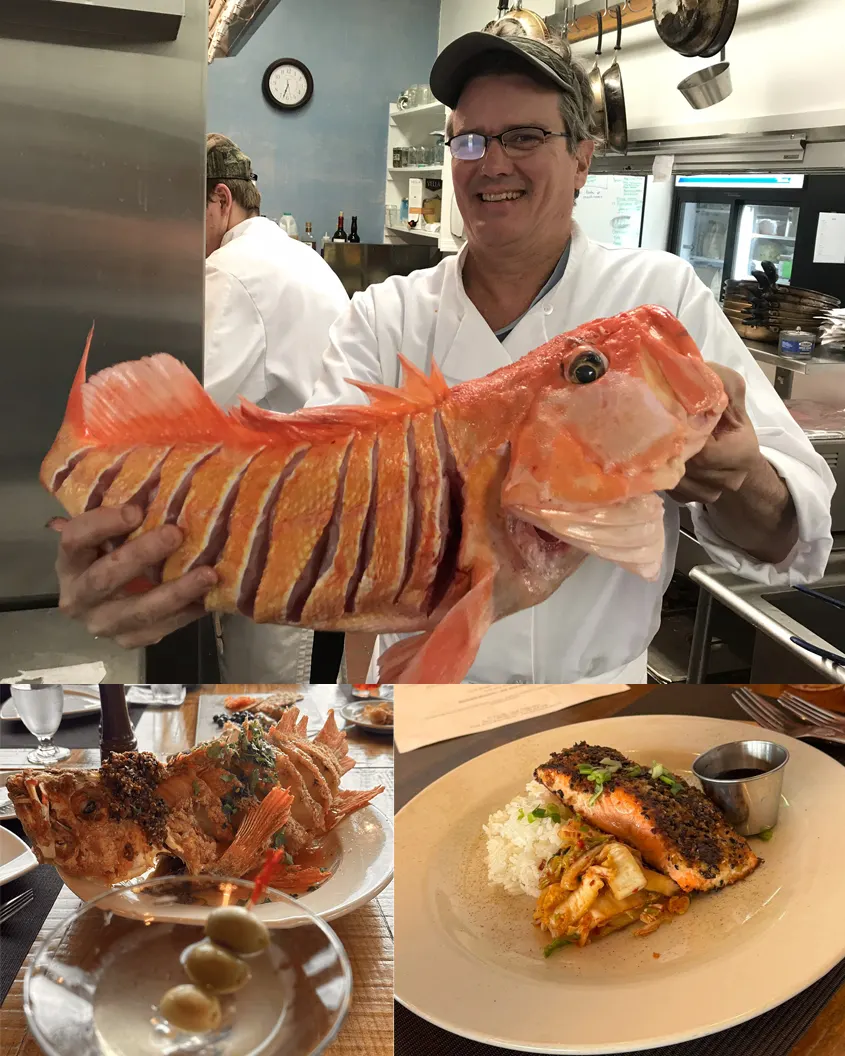
You don't have to wait until you get home. Guests who fished with us that day can have the kitchen at Latitude 55 North prepare what they brought back. Bring it to the dock crew at processing, and the chef plans the rest.
Latitude 55 North is open to the public in season, and the dinner menu changes daily around the freshest local seafood.
Do I need to trim or clean my fillets before cooking?
No. We trim every fillet at the lodge so there's no trimming required before you cook it. Thaw it, rinse it, cut it into serving pieces if you like, and it's ready.
How should I thaw vacuum-sealed fish?
Thaw it in the bag in a lukewarm water bath, which takes minutes. Then tear open the bag, rinse the fish thoroughly in cold water, and cook it right away. If you'd rather plan ahead, open the bag and thaw the fish in the refrigerator overnight.
How long will my fish keep in the freezer?
Up to two years. Some species last longer than others, so cook the oldest bags first.
How much fish will I bring home to cook?
Plan on 40 to 60 pounds of boneless fillets per angler in June and early July, and 60 to 80 pounds from late July through early September, all species combined. It's a number we typically exceed, and one or two big fish raise it a lot.
Restock the Freezer
Come Catch the Next Batch
Private multi-species charters out of Craig, Alaska, with processing included. Call or text 907-401-0686, or start a reservation online.