
Alaska King Salmon Fishing
Guided king salmon (chinook) trips out of Craig, Alaska. Private charter, gear and processing included.
King salmon, also called chinook, is the largest and most prized of the Pacific salmon species. They run hard, take strong, and pull deep. A keeper from Southeast Alaska commonly runs 15 to 35 pounds, with trophy fish over 40 pounds caught every season.
This page covers what you need to plan a king salmon trip with Shelter Cove Lodge: when to come, where we fish, the gear we provide, the regulations situation, and how to book.
Already booking? Skip to Book Your Trip or browse our all-inclusive fishing packages.
King Salmon at a Glance
| Most common catch weight | 15–35 lbs (most fish) |
|---|---|
| Trophy class | 40+ lbs |
| Best time to fish | June through early July (peak); 2027 package trips run June 7 to September 2 |
| Trip type | Private charter, 6 a.m. departure, scheduled 4 p.m. return, mooching and downrigger trolling |
| Where we fish | Protected waters off Prince of Wales Island, 30 to 200 feet |
| Table fare | Excellent: high oil content, prized for grilling, smoking, and curing |
Best Time to Fish for King Salmon in Alaska
King salmon arrive in Southeast Alaska ahead of the other salmon, and our 2027 package trips run June 7 to September 2. The peak window for our guests is June through early July, when the fish are aggressive, returning to spawn, and the weather is most settled. Late June into early July is the prime stretch. By mid-July, kings start to taper as silvers begin to show.
The season at a glance
- June – early July: Peak king salmon window, from our June 7 opening. Aggressive feeding and predictable weather.
- Mid-July – early August: Tail end of king season as silvers ramp up. Good week for guests targeting both species.
If kings are your primary target, build the trip around the last week of June or the first week of July. That's the sweet spot in our waters most years.
Related reading: Our full fishing program · Fishing packages
Where We Fish for King Salmon
Our king salmon grounds are 5 to 25 miles from Craig on Prince of Wales Island, and we leave from our own private harbor right out the front door of the lodge. Most days you are on fish within 45 minutes to 1 hour. We fish protected and semi-protected waters, working the edges where kings stage before pushing toward freshwater. Salmon depths range from 30 to 200 feet depending on the weather, the season, and where the fish are congregating.
These are not offshore long-runs. Short to grounds, more time fishing, less time motoring. The same protected waters that keep halibut trips comfortable for guests with sea-sickness concerns work in your favor for king salmon, too.
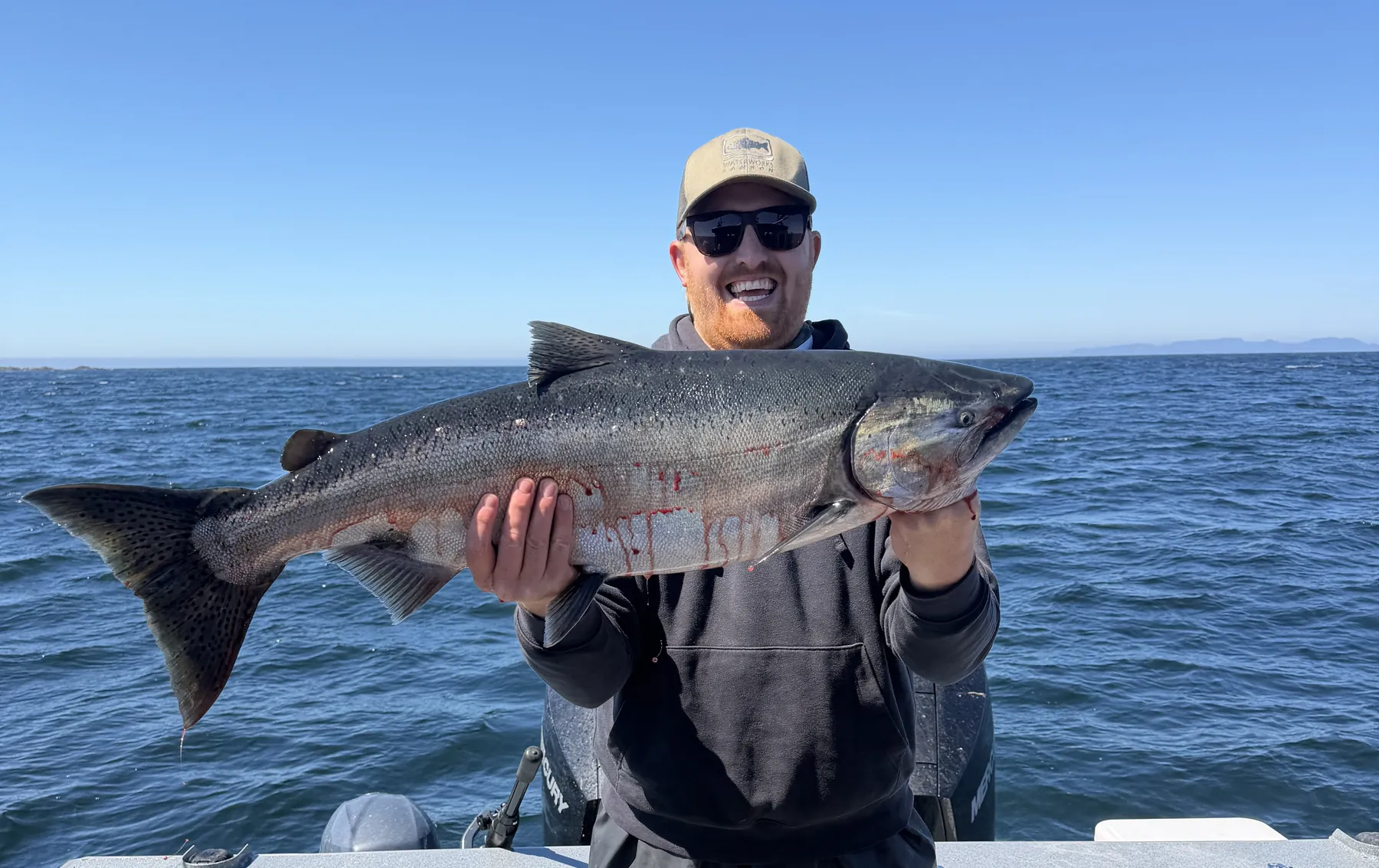
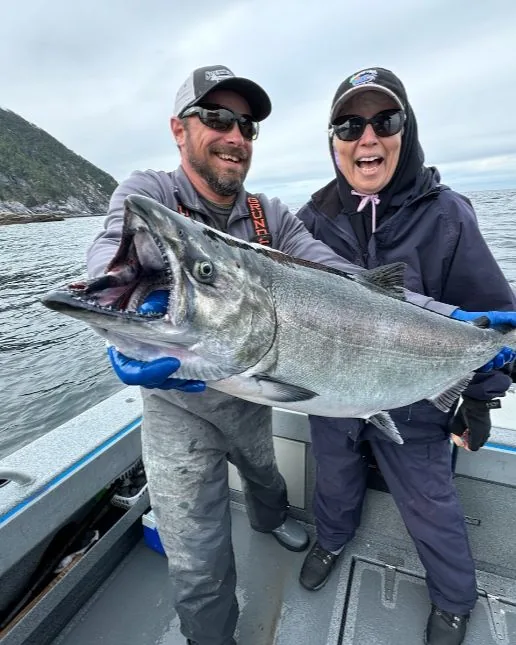
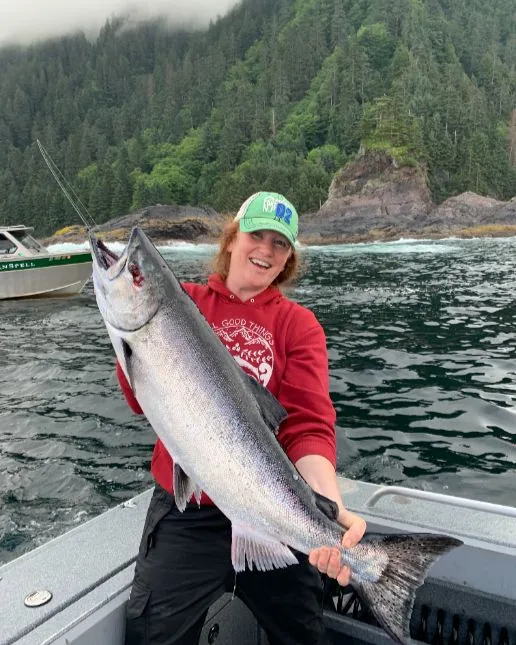
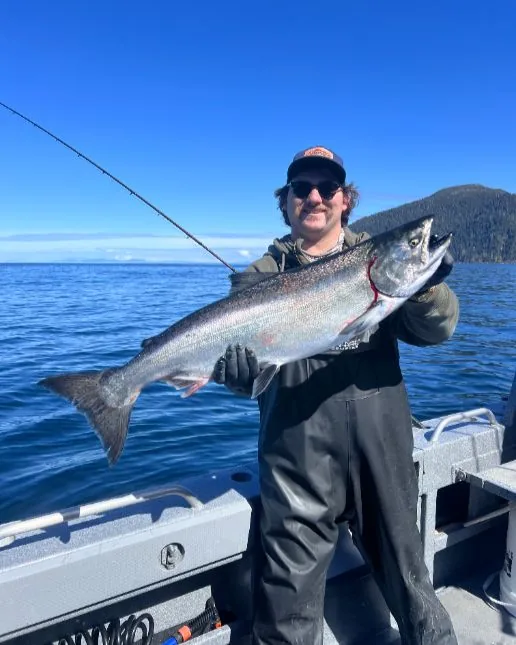
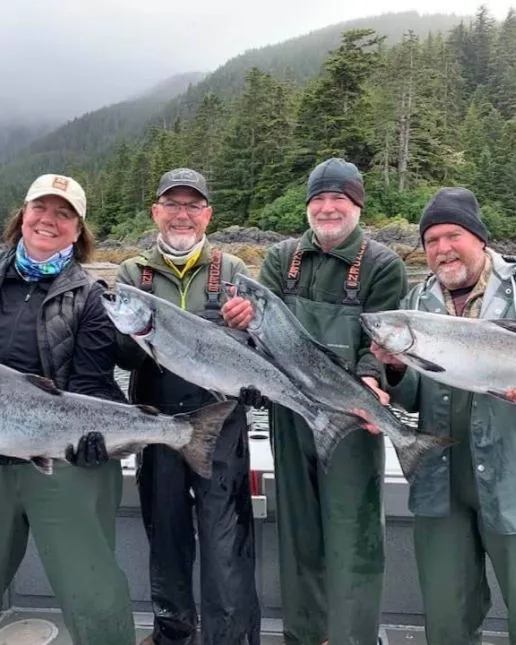
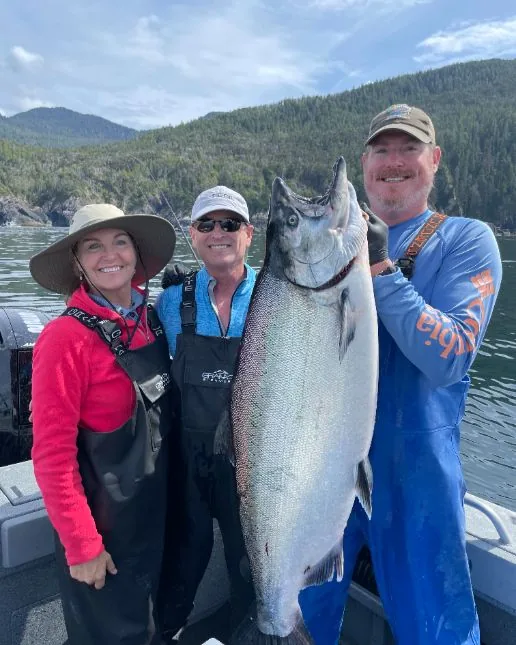
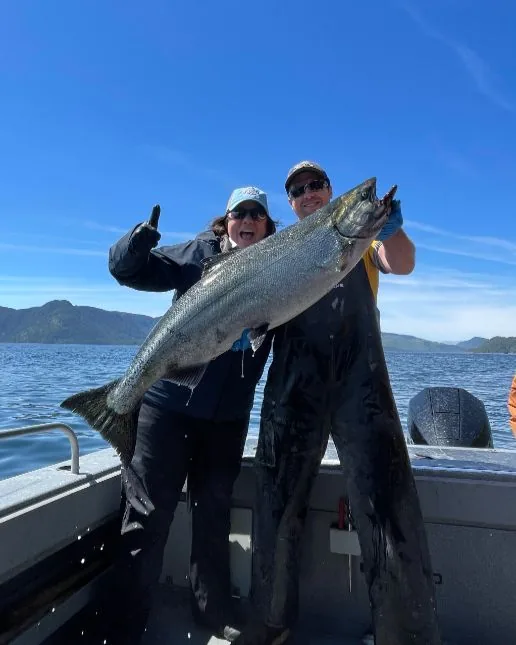
Captains read the day. If we're getting bites at 60 feet, we stay shallow. If they're holding deep, we run downriggers. Some weeks the kings are picky and we change setups three times before we crack the code.
We talk through what we're doing and why.
Related reading: Getting to Craig, Alaska
Gear and Technique
All king salmon gear is included with your trip. We rig everything; you fish. The two techniques we use most:
Mooching
The classic king salmon technique in our waters: a herring or anchovy fillet on a 2-hook setup, drifted at depth with a sliding lead. The strike is unmistakable: a deep, deliberate pull.
Mooching is hands-on and works best when kings are feeding aggressively in the upper 80 feet of the water column.
Downrigger Trolling
When fish are deeper or holding tight to a specific depth, we run downriggers. A downrigger holds your bait at a precise depth (often 60 to 200 feet) while the boat moves.
The release clip pops on a strike, and your rod loads up as the fish runs. Less hands-on than mooching, more efficient at covering water.
We coach you through both techniques. By the end of day one, most guests have figured out which they prefer. Some weeks one outfishes the other by a wide margin; some weeks they're even.
Bring polarized sunglasses and a hat with a brim. King salmon fishing means watching rod tips for hours. Your eyes will thank you.
Regulations and What You Can Keep
Alaska king salmon regulations have shifted significantly in recent years. Across many parts of the state, retention has been restricted in response to declining wild stocks, sometimes to one fish per year and sometimes to catch-and-release only. The rules vary by region, by year, and sometimes within a season.
In our area of Southeast Alaska around Prince of Wales Island, the regulations are set by the Alaska Department of Fish & Game and updated annually. Your captain will brief you on the current limits the morning of your first day, and we coach you on what's legal to keep, what to release, and how to handle release fish to maximize survival.
Most years, our area has allowed king retention with bag limits of 1 to 2 fish per day depending on emergency orders and run strength. Even when retention is restricted, the fishing itself stays open, and many guests find the fight is the point regardless.
We follow the regulations carefully. If a rule changes mid-week, we adjust mid-week. Honest, by-the-book trips are how we keep the fishery healthy.
What's Included
King salmon trips are part of our all-inclusive package structure. Same setup as halibut: everything you need from the moment you arrive in Craig is covered.
Included with every king salmon trip
- Private charter boat with dedicated captain, not a shared trip with other parties.
- Mooching rods, downrigger setups, all bait, lead, and rigging.
- A 6 a.m. departure and a scheduled 4 p.m. return. The boat is yours alone, so the day is flexible, and groups often limit out and come back early.
- Alaska sportfishing license assistance and king salmon stamp guidance.
- Fish cleaning, vacuum-sealing, and flash-freezing at the lodge.
- Insulated fish boxes packed to 50 pounds, the airline limit before overweight fees.
- All wet weather gear, including comfortable boots.
- All ground transportation.
- Three meals a day at Latitude 55 North, our on-site restaurant.
- Oceanfront lodging at Shelter Cove Lodge.
What to bring
Warm layers to wear under the rain gear we provide, polarized sunglasses, a hat with a brim, sunscreen, and any personal medications. King salmon fishing is patient work. Bring something to read or watch the water with between bites.
How to Book a King Salmon Trip
King salmon trips are sold inside our all-inclusive fishing packages. Most guests book a 4-night, 3-day stay: three full fishing days on the water, four nights at the lodge. Every day is a multi-species day. Tell us which species matter most (kings, halibut, or silvers) and your captain plans the day around it.
- Pick your week. 2027 package trips run June 7 to September 2. Late June and early July are the peak king weeks.
- Tell us your party size. Pricing scales with how many anglers share the boat.
- We confirm dates and send your deposit invoice. The deposit is $1,000 per person. A second $1,000 per person payment is due January 15, 2027, invoiced along with the commuter flights our staff books for you, and final payment is due March 31, 2027.
- Show up in Craig. We handle the rest.
Frequently Asked Questions
June through early July is the peak window for our Southeast Alaska waters, and late June and early July are the prime stretch. Our 2027 package trips run June 7 to September 2, and kings are still caught after the peak as they taper through late summer.
Most keepers from our area run 15 to 35 pounds. Trophy fish over 40 pounds are caught every season. The state record is over 90 pounds, though fish that size are rare anywhere in the modern fishery.
No, not in our area. Alaska has had region-by-region closures and retention restrictions in recent years, but our waters around Prince of Wales Island have stayed open with annual bag limits set by ADF&G. Specific limits change year to year. We brief you on current rules the morning of your first trip.
Limits are set annually by the Alaska Department of Fish & Game and can change mid-season under emergency orders. Most years, our area allows retention of 1 to 2 king salmon per day for non-residents with valid licenses and king salmon stamps. We help with paperwork and keep you on the right side of the rules.
Same fish. "King salmon" is the common name on the West Coast and in Alaska; "chinook" is the species' formal name. You'll see both used interchangeably.
Yes. A non-resident sportfishing license plus a king salmon stamp are required if you intend to keep fish. We help you sort the paperwork before your first day on the water. License assistance is included in your package.
Different fish, different fight. Halibut is bottom-fishing with heavy gear; kings are mid-water with lighter rods and active technique. Every trip is a multi-species trip, so most guests catch both, often on the same day.
King salmon is widely considered the best-eating salmon. Higher oil content than halibut, prized for grilling, smoking, and curing. Halibut is a milder, flakier white fish; kings are richer and more flavorful. Most guests bring home a mix and enjoy both.
Yes. Every trip is a multi-species trip. Halibut usually comes fast enough to leave plenty of time for kings, silvers, and rockfish on the same day. Tell us which species matter most and your captain plans the day around it.
A realistic expectation is 40 to 60 pounds of boneless fillets per angler in June and early July, and 60 to 80 pounds from late July through early September. That's all species combined, and it's a number we typically exceed. One or two big fish can raise it a lot: a 100-pound halibut yields roughly 50 pounds of fillets. We trim every fillet so it's ready to cook. Boxes are packed to 50 pounds, the airline limit before overweight fees, and you collect your insulated fish boxes at the Ketchikan airport.
Additional Resources
- All-Inclusive Fishing Packages: pricing, what's included, and how to book.
- Halibut Fishing: companion species page; many guests target both.
- The Lodge at Shelter Cove: our oceanfront lodge, rooms, amenities, and what to expect.
- Getting to Craig: flights and travel logistics. Our staff books your commuter flight to Craig.
- Our Full Fishing Program: all species, charter details, and what we offer beyond king salmon.
- Contact Shelter Cove: questions, planning a trip, or talking through dates.
- ADF&G Sport Fishing Regulations: official source for current king salmon limits and rules.
Three Days. Real Kings.
No Logistics.
Book Your Trip
Call or text 907-401-0686 to talk through dates, or start a booking online.
Reserve Now →