Prince of Wales Island, Alaska
The third-largest island in the United States, wrapped in sheltered inside waters with the open Pacific right next door. It's where we fish, and it's worth knowing before you come.
Prince of Wales Island, "POW" to everyone who lives here, sits at the southern end of Southeast Alaska, west of Ketchikan. Only Hawaii's Big Island and Alaska's Kodiak are bigger among U.S. islands. Most of it is Tongass National Forest: coastal temperate rainforest, salmon streams, and a coastline broken up by bays, channels, and many smaller islands.
We've fished these waters from Craig, on the island's west coast, as a family operation since 1999. This page covers the island itself: how it's laid out, why the fishing is so good, what lives here, and what there is to do. For the trip details, see Plan Your Trip.
POW at a Glance
| Size | Third-largest island in the U.S.; more than 135 miles long; about 2 million acres |
|---|---|
| Land | Mostly Tongass National Forest, the largest national forest in the country |
| People | About 5,560 across a dozen small communities |
| Largest town | Craig, on the west coast, home of Shelter Cove |
| Other towns | Klawock, Hollis, Hydaburg, Thorne Bay, and smaller villages |
| Caves | More than 500 documented, including El Capitan Cave |
| Getting here | Through Ketchikan by commuter flight, which our staff reserves for each guest. See Getting Here. |
Geography: An Island of Islands
POW isn't one clean coastline. The west side, where Craig sits, faces an archipelago of smaller islands, and past them, the open Pacific. Inland, the forest is laced with lakes, rivers, and streams that carry salmon runs from spring to fall.
Unlike most of Southeast Alaska, much of POW is connected by road. The island's road network links Craig with Klawock, Hollis, Hydaburg, Thorne Bay, and the smaller communities, though it wasn't fully built until the 1990s. That means streams, trailheads, and towns you can reach by car instead of by bush plane.
The climate is mild for Alaska, moderated by the Pacific. It's a temperate rainforest, so expect rain and a lot of green. On the boat, we provide all wet weather gear, including boots.
Why POW's Inside Waters Fish So Well
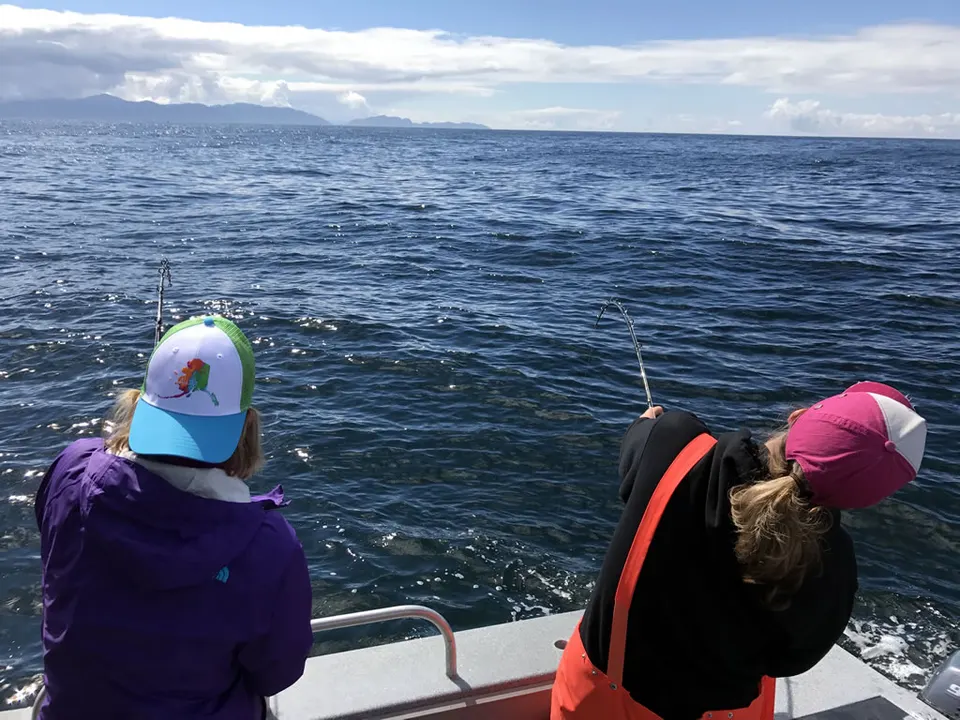
The short answer is shelter plus access. The islands off Craig create hundreds of miles of protected coastline, and the open ocean is just beyond them. That combination is rare, and it's the reason the fishing here is so consistent.
Protection from the weather
The archipelago breaks up wind and swell. When it's rough outside, we fish the lee side of an island instead of losing the day. The sheltered water is also how Shelter Cove got its name.
The open ocean next door
On calmer days, we can run to the outer coast, where salmon returning from the open Pacific pass first. Being close to that migration route means more species, more fish, and bigger fish than a lodge that only fishes inside waters or a few river mouths. Our kings tend to stay later into the summer, and our silvers usually show up earlier than in most of Alaska.
Bottom fish close to town
Our halibut grounds are 5 to 25 miles from Craig, and most days we're on fish within 45 minutes to 1 hour. Lingcod and rockfish share the same structure, so every trip is a multi-species trip. Halibut usually comes fast enough to leave plenty of time for salmon and rockfish the same day.
Light pressure
With a small population and a connection through Ketchikan to get here, POW sees far less fishing pressure than the big-name ports elsewhere in the state.
Weather is the one thing nobody controls in Southeast Alaska. What we can control is where we fish. With the outer coast on one side and protected water on the other, our guides pick the day's spots around the conditions, and we'd rather move you somewhere sheltered and keep fishing than push into chop. In 27 years at Shelter Cove, Dave has never canceled a fishing day.
What You'll See on POW
Fishing is the focus, but the island is largely unspoiled, and a wildlife sighting is more likely than not. Here's what our guests see most.
On the water
- Humpback whales, often seen from the boats and sometimes from the lodge deck. Orcas show up now and then.
- Sea lions and harbor seals. The sea lion rookery at Cape Addington is a boat ride from Craig.
- Sea otters, especially around the aptly named Sea Otter Sound.
- Porpoises and dolphins: harbor porpoise, Dall's porpoise, and Pacific white-sided dolphins.
On land
- Black bears, in healthy numbers and frequently spotted around Craig. There are no grizzlies (brown bears) on POW.
- Sitka black-tailed deer, commonly seen along the roads.
- Wolves. Rarely seen, sometimes heard at night.
- River otters, beaver, marten, and mink.
- Island originals: the Prince of Wales flying squirrel and POW Island ermine, found nowhere else.
In the air
- Bald eagles, constantly.
- Osprey and goshawks.
- Puffins on the rocky outer islands.
- Trumpeter swans in spring.
For bear viewing during the salmon runs, see the Dog Salmon Fish Pass on our Craig, Alaska page.
Towns on Prince of Wales Island
Craig
The largest town on the island and its business center, on the west coast. A working fishing town for over a century, originally called Fish Egg, and named for Craig Miller, who built a fish saltery on nearby Fish Egg Island in 1907. Shelter Cove is here. Our full Craig guide →
Klawock
About a ten-minute drive from Craig. Klawock's totem park holds restored historic poles alongside newer ones. The Klawock Airport, where commuter flights from Ketchikan land, is about 15 minutes from the lodge.
Hollis
On the island's east side, about 35 miles by road from Craig.
Hydaburg, Thorne Bay, and beyond
Smaller communities connected by the island road system.
The Tlingit and Haida peoples have lived on and used this land for its resources for generations, and their culture is still very much present on the island, including in its totem parks.
Getting Around the Island
If you're fishing with us, you don't need a car. All ground transportation is included in every fishing package. We meet you when you arrive on the island, drive you to the lodge, and get you back for your flight home.
If you want to explore on your own before or after your trip, the road system makes it possible. Rental cars on the island are limited, so talk to us before your trip and we'll help with arrangements. Most anglers who head for the streams check river conditions with our guides and grab a Forest Service map.
Getting to the island is a two-step trip: your own Alaska Airlines flight to Ketchikan, then a commuter flight on Island Air Express, Black Rock Aviation, or Misty Fjords Air that our staff reserves for you. The details are on our Getting Here page. The full timeline, from booking to the flight home, is in our Plan Your Trip guide.
Things to Do on Prince of Wales Island
Arrival and departure days, a rest day, or a few extra days on the island give you time for more than saltwater. A few of the highlights, with more on hunting, caves, and the totem parks in our sports guide to Prince of Wales Island:
El Capitan Cave
On the north end of the island, El Capitan is the largest known cave in Alaska, and the first cave in Southeast Alaska where fossil bones more than 9,000 years old were found. Guided tours run in summer.
Klawock Totem Park
A short drive from Craig. Totem poles were how Native families recorded their histories and marked important events, and the park is one of the best places on the island to see them up close.
Freshwater Fishing
Spring steelhead run from mid-April to early June, with a later fall run. Pink and silver salmon fill the streams in late summer and fall, and cutthroat trout and Dolly Varden are around much of the year. Some guests fish the streams on their arrival and departure days.
Cabins, Trails, and Bear Viewing
Forest Service public-use cabins, walking trails in Craig, and the Dog Salmon Fish Pass bear-viewing area are covered on our Craig page, along with what's in town.
In fall, the island also draws hunters for Sitka black-tailed deer and black bear. Check current Alaska Department of Fish and Game regulations before you plan a hunt.
Prince of Wales Island FAQ
In Southeast Alaska, west of Ketchikan. It's the third-largest island in the United States, after Hawaii's Big Island and Kodiak. Craig, where Shelter Cove is, sits on the island's west coast.
The islands off Craig create hundreds of miles of protected water, so there's almost always somewhere sheltered to fish, and the open Pacific is close enough to fish the salmon migrating along the outer coast. Our halibut grounds are 5 to 25 miles from Craig, and fishing pressure is light compared with bigger ports.
No. There are no grizzlies (brown bears) on POW. The island has a healthy black bear population, and they're frequently spotted around Craig.
Not if you're fishing with us. All ground transportation is included in our fishing packages. If you want to explore on your own, rental cars are limited, so talk to us before your trip.
Fly to Ketchikan, then take a commuter flight to the Klawock Airport on Island Air Express, Black Rock Aviation, or Misty Fjords Air. Shelter Cove staff reserve that flight for each guest. Our Getting Here page has the details.
See the Island From Our Boats
Private multi-species charters out of Craig, with lodging, meals, and processing included. Call or text 907-401-0686.